
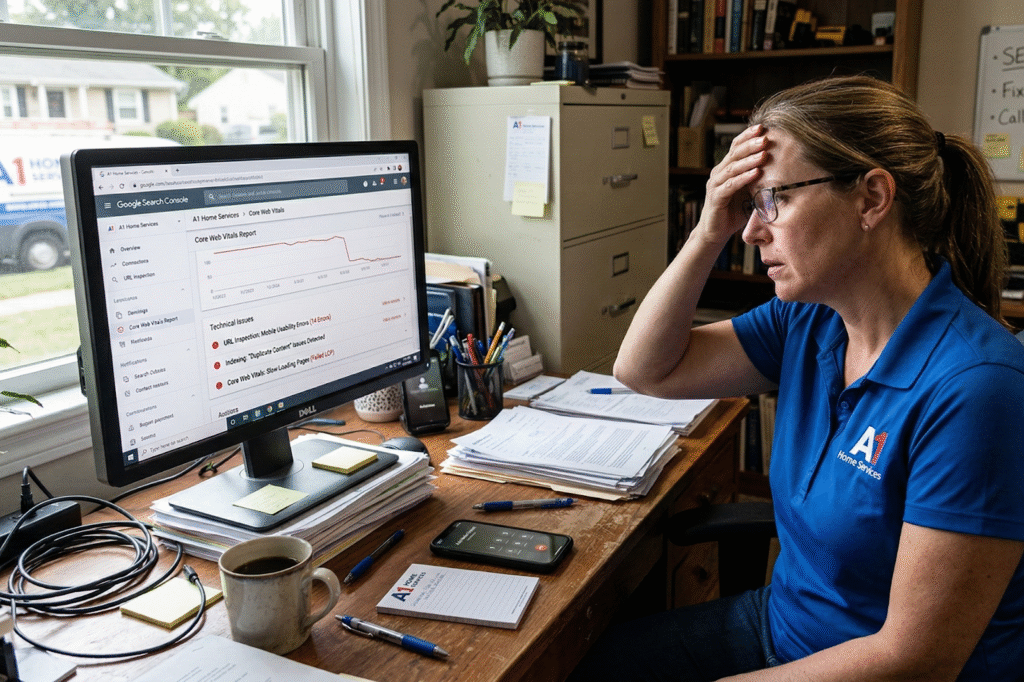
Many home service business owners feel like SEO is a black box. Terms like indexing, schema, and core web vitals sound technical and intimidating. Meanwhile, the real goal is simple: get the phone to ring and keep crews busy.
The truth is, rankings usually don’t fail because the business isn’t good. They fail because small technical issues quietly block Google from understanding the site, trusting it, or showing it in the right local searches. These problems often go unnoticed because the website looks fine on the surface.
This guide breaks down the most common technical issues that hurt home services SEO, in plain language. The goal is to show what actually matters, what doesn’t, and what to fix first to get more local calls.
What Home Services SEO Really Means
Home services SEO is about showing up when people urgently need help. It’s not about going viral. It’s about appearing when someone searches things like:
- “emergency plumber near me”
- “AC repair in [city]”
- “water heater leaking”
Google wants to deliver fast, safe solutions. For home service businesses, that usually means appearing in two places:
The Map Pack (Google Maps results)
The top three local listings with reviews and a map. These often drive quick phone calls.
Local organic results
The regular website listings below the map. These bring steady traffic for specific services.
For SEO to work, Google must clearly understand:
- Who the business is
- Where it’s located or what areas it serves
- What services it offers
- Why it should be trusted
Technical SEO is the foundation. If it’s weak, everything else struggles.
Local SEO Basics Every Home Service Site Needs
A home service website shouldn’t be a brochure. It should clearly answer local customer questions.
A strong setup usually includes:
Clear service pages
Avoid listing all services on one page. Each core service should have its own page with details, FAQs, and clear calls to action.
Visible contact and location info
Business name, phone number, address (if applicable), service areas, and hours should be easy to find. If customers struggle to find contact info, Google notices too.
A strong Google Business Profile
The website and GBP must match. If the profile says one city and the website says another, that creates confusion.
Reviews and trust signals
Home services are high-trust decisions. Reviews, photos, licensing, and guarantees matter.
Simple Technical Issues That Kill Rankings
1) Slow Site Speed (Especially on Mobile)
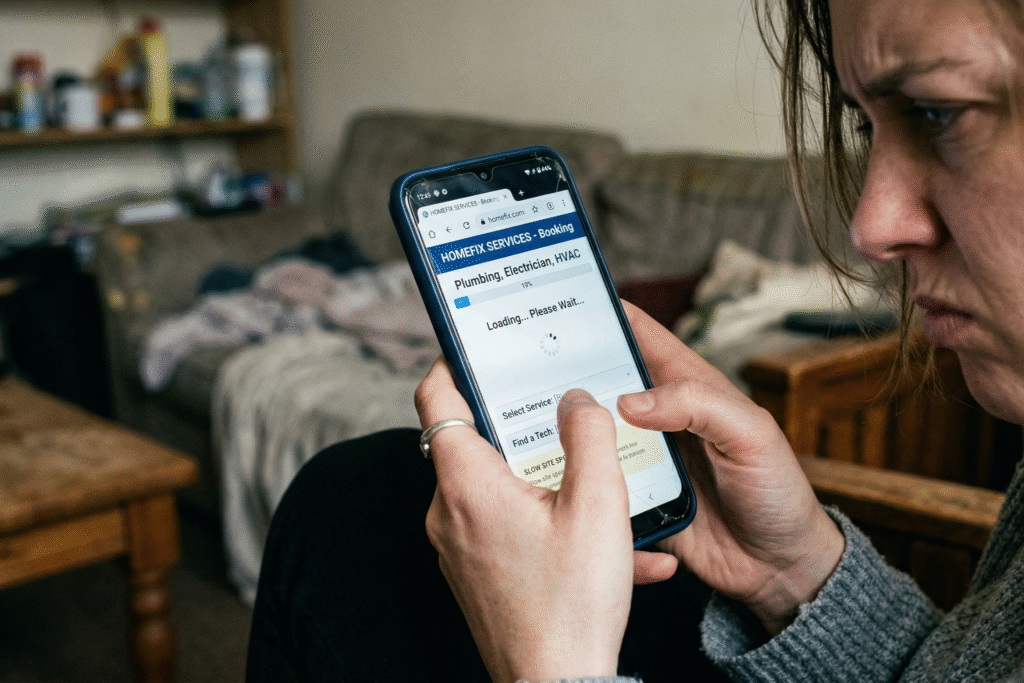
Most customers are on phones and stressed. If a site loads slowly, they leave and call someone else. Google tracks that behavior.
Common causes:
- Large, uncompressed images
- Video backgrounds
- Cheap hosting
- Too many plugins
Quick fixes:
- Compress images and use WebP
- Remove sliders and animations
- Use caching
- Test the site on a real phone
Speed helps rankings and conversions.
2) Google Can’t Crawl the Site
If Google can’t read the site, it can’t rank it.
Common blockers:
- robots.txt blocking pages
- noindex tags left on after a redesign
Quick check:
Search Google for a site:yourwebsite.com. If a few or wrong pages show up, there’s a problem.
3) Duplicate or Thin Service and City Pages
Many businesses create multiple city pages with the same content and just swap city names. Google can detect this and may downgrade the entire site.
Better approach:
- Build strong service pages first
- If using location pages, make them truly local with photos, testimonials, landmarks, and area-specific issues
The goal is to prove real local service, not trick Google.
4) NAP Inconsistency
NAP means Name, Address, Phone number. Google compares this info across the web.
Common problems:
- “ABC Plumbing” vs “ABC Plumbing LLC”
- Old phone numbers on some sites
- Different addresses on directories
Fix plan:
- Choose one official format
- Update the website and Google Business Profile first
- Fix major directories and remove duplicates
This alone can improve map rankings.
5) Missing or Broken Schema Markup
Schema is code that helps Google understand business details.
Common issues:
- No schema
- Broken schema from plugins
- Schema that doesn’t match real info
Best practice:
- Use LocalBusiness schema
- Match NAP exactly
- Avoid fake review markup
Schema supports local trust but isn’t a magic fix by itself.
6) Incorrect Canonical Tags
Canonical tags tell Google which version of a page is the main one.
Problems happen when:
- http and https both work
- www and non-www both work
- Tracking parameters create duplicates
Fixes:
- Force one version of the site
- Use proper redirects
- Set correct canonical tags
This often explains sudden ranking drops.
7) Broken Internal Links and Orphan Pages
Internal links help Google and users navigate the site.
Problems include:
- Service pages not linked in menus
- Blogs that don’t link to services
- Deleted pages still linked
Fixes:
- Put core services in navigation
- Link related services together
- Fix broken links and redirects
This is one of the easiest SEO wins.
8) Index Bloat from Low-Value Pages
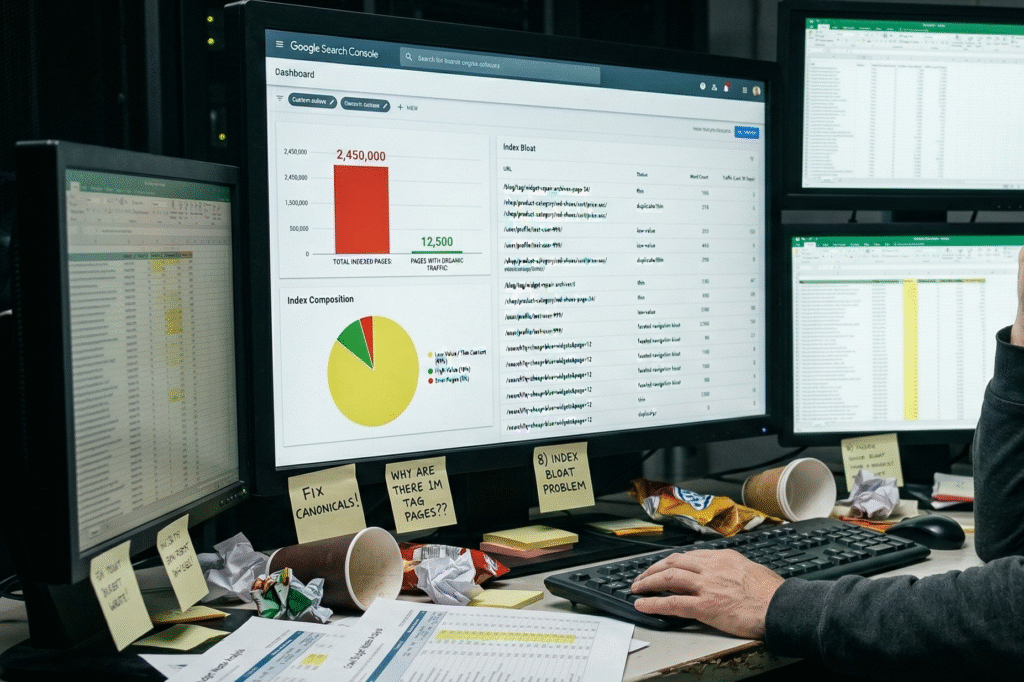
Some sites generate hundreds of useless pages.
Common sources:
- Tag and category pages
- Author pages
- Old promotions
- Test or calendar pages
Why it hurts:
- Google wastes crawl time on junk
- Important pages get less attention
Fix:
- Noindex or delete low-value pages
- Keep the site focused on services and locations
Clean sites usually perform better.
9) Weak Title Tags and Headings
Title tags tell Google what a page is about.
Poor examples:
- “Home”
- “Services”
Better examples:
- “AC Repair in Phoenix | Brand Name”
- “Emergency Electrician in Mesa | Brand Name”
Headings should clearly explain the service, pricing factors, FAQs, and service areas.
10) Not Enough Trust Signals
A site can be technically sound and still struggle if it feels untrustworthy.
Trust signals that help:
- Real reviews
- Photos of team, trucks, and jobs
- Licenses and insurance
- Clear guarantees
- Strong About page
- Clear contact info
Sites that feel real tend to perform better.
Quick Local SEO Checklist
- Fast mobile load speed
- Pages indexed correctly
- One strong page per core service
- Consistent NAP everywhere
- No copy-paste city pages
- Proper canonicals and redirects
- Strong internal linking
- Low-value pages removed or noindexed
- Clear titles and headings
- Strong reviews and trust signals
How Home Service Rankers Helps
Most owners don’t need more tips. They need someone to find what’s broken and fix it in the right order.
Home Service Rankers helps by:
- Cleaning up technical SEO issues
- Aligning the website, GBP, and directories
- Building service pages that attract real calls
- Improving conversions with better layout and trust signals
- Guiding content that builds authority without fluff
Once technical issues are fixed and pages align with real local searches, SEO becomes measurable: more calls, more booked jobs, and a full schedule.
Frequently Asked Questions
How long does home services SEO usually take to start working?
Most home service businesses start seeing early movement in about 3–6 months, but competitive areas can take longer because Google needs time to re-crawl changes and compare the business against nearby competitors.
Is a website still needed if the business already has a Google Business Profile?
Yes—Google Business Profiles help customers find the business, but a website usually builds more trust and gives Google more service and location details to rank.
Do social media posts directly improve Google rankings for local service businesses?
Social media usually doesn’t directly boost rankings, but it can help indirectly by increasing brand searches, traffic, and trust signals that support local visibility.
How many Google reviews does a home service business need to rank well?
There’s no magic number; the goal is steady, ongoing review growth and strong quality compared to local competitors, not a one-time “target.”